Changing who sits around the table does not automatically create a new team. Sometimes the membership changes while the old story remains in the room.
This newly constituted senior leadership team of ten was leading a higher education organisation through a period of change. Some people had stayed, some had joined and others had left. The team also worked within a wider system that included a board and elected representatives.
On paper, it was a new team. In practice, established patterns still shaped who spoke, who held back, whose view carried weight and what remained difficult to say.
The engagement at a glance
- Team
- Ten members of a newly constituted senior leadership team
- Setting
- A higher education organisation navigating change
- Duration
- Three months
- Team work
- Two facilitated whole-team sessions
- Individual work
- An Enneagram profile and one-to-one coaching conversation for every team member
- Leadership support
- Ongoing one-to-one coaching for the senior leader, plus two sessions with the leader and their deputy
A new team carrying an inherited story
The senior leader had already spent considerable energy managing interpersonal tensions. They wanted the new group to have a different experience, but were conscious of the risk of upsetting established relationships or reproducing the patterns of the team that came before it.
Some voices dominated discussion. Others contributed less than they were capable of. Frustration existed but was not always spoken. Informal hierarchy could carry as much influence as formal responsibility.
The challenge was not simply to help ten capable individuals perform their roles. It was to help them notice the system they were creating together and make more deliberate choices about the team they wanted to become.
Seeing the person behind the pattern
The work began with individual Enneagram profiles and one-to-one coaching conversations. The purpose was not to reduce people to types or labels. It was to help each person understand more about their motivations, strengths, habitual responses and the contribution they could make to the team.
Those individual insights then became useful material for the whole-team conversations. Behaviour that had previously felt difficult or confusing became more understandable. People could begin to see the person behind the pattern, while still taking responsibility for the effect of their behaviour.
The team also explored its stage of development and the different starting points people were bringing into the room. Some carried the history of the previous team. Others were trying to find their place inside an established culture. Naming those differences created a shared language without pretending that everybody had experienced the organisation in the same way.
The moment the room changed
During one team session, the person who spoke least asked the group to pause. They needed a little longer to think before the conversation moved on.
The group stopped.
When that person was ready, they contributed an idea that shifted the direction of the discussion and led to a better conversation and outcome.
It was a small moment with larger significance. The team did more than invite a quieter person to speak. It changed its pace so that a different way of thinking could influence the work. Someone asked for what they needed, the room responded, and the value of doing so became immediately apparent.
Reauthoring the team story
Alongside the interpersonal work, the team examined the stories surrounding it: the inherited account of the previous leadership team, the stories other people in the organisation told about senior leadership, and the future story this group wanted its conduct to make believable.
A new story could not simply be agreed in a workshop and declared complete. It would need to become recognisable through meetings, decisions, relationships, requests for help and the way people used their influence.
The programme therefore held enough structure for honest work, while leaving room for what was actually happening between people to emerge. Safety did not mean avoiding challenge. It meant creating conditions in which difficult truths, uncertainty and vulnerability could be handled without people being diminished.
What began to change
The changes were visible in how team members worked together:
- More people spoke up and contributed ideas during meetings.
- Communication travelled across organisational sections, rather than remaining inside separate areas of responsibility.
- People called for support and colleagues increasingly stepped in when help was needed.
- Newer members developed a sense of belonging, despite having spent relatively little time with the group.
- Longer-standing members created more room for others, rather than continuing to run the show.
- Individual self-awareness grew, helping members understand their own development and the effect they had within the team.
What this work suggests
A team is a living system, not simply a collection of capable individuals. Replacing members, changing reporting lines or agreeing a new vision may alter the cast without changing the story.
For something different to become possible, a team may need to understand the patterns it has inherited, make better use of the differences within it and turn its intentions into visible everyday behaviour.
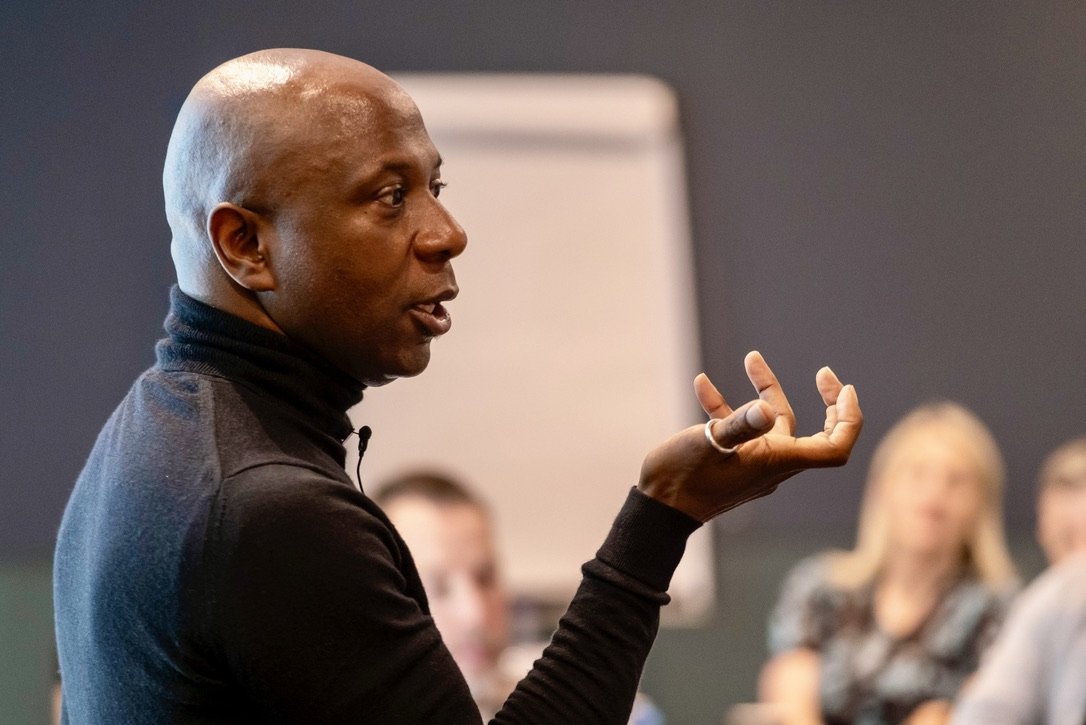
This anonymised case study is drawn from Robert's team coaching practice. The organisation and participants are not named, and identifying details have been removed or generalised. The outcomes described are qualitative observations from the engagement rather than independently measured performance results. The accompanying photograph is illustrative and does not depict the client organisation.