Enneagram for Leaders & Teams
It doesn't simply describe what you do. It begins to illuminate why you do it.
The Enneagram provides something many personality tools don't. Used well, it gives leaders a sophisticated lens through which to understand motivation, communication, conflict, decision making, stress and the patterns they bring into relationships.
Individual Enneagram
Using the iEQ9 professional assessment, we create a detailed picture of your patterns, motivations, strengths, blind spots and leadership tendencies. The report isn't the destination. It's the beginning of the conversation.
- What happens to me under pressure?
- What am I protecting?
- Where does my strength become overused?
- What might other people experience from me that I don't see?
- What becomes possible when I have more choice?
Team Enneagram
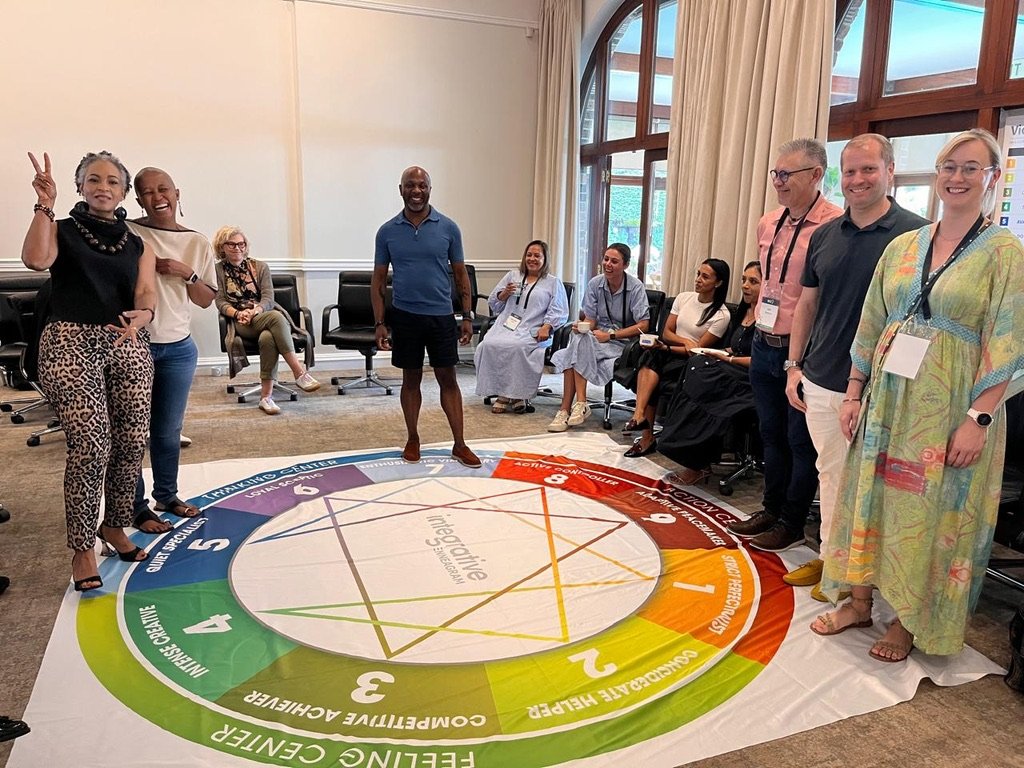
With teams, the work becomes even more interesting. Individual profiles combine to reveal the patterns of the collective, how different people communicate, where conflict originates and what the team instinctively pays attention to.
- Who needs time to think, and who thinks aloud
- What it routinely misses
- How it behaves under pressure
- Where particular voices dominate
- Where its strengths may also be its blind spots
The result isn't nine people wearing personality labels. It's a team with a richer language for understanding itself, and considerably more choice about how it works together.
What is an iEQ9 assessment?
The iEQ9 is a professional Enneagram assessment designed to support individual, leadership and team development.
You complete the assessment online and receive a detailed report exploring your likely Enneagram pattern and related themes.
The report may include information about motivation, behavioural patterns, strengths, potential blind spots, stress, communication, decision-making, leadership and development.
The assessment is not the destination. It is the beginning of a conversation.
Your report is explored in a professional debrief rather than simply emailed to you without support. Together we consider what resonates, what requires further exploration and how the insights connect with your real life and leadership.
The value comes from applying the material with curiosity. It should help you notice patterns and practise different choices, not encourage you to explain everything with a type number.
Does the Enneagram put people into boxes?
Used badly, any personality framework can become a box.
Used well, the Enneagram helps people see the box they may already be living inside, and discover that they have more choice.
The purpose is not to reduce somebody to a number or use type as an excuse: “I behave like this because I'm an Eight.” “She avoids conflict because she's a Nine.” “He needs everything perfect because he's a One.”
Those statements close curiosity rather than opening it.
Instead, we explore tendencies, motivations and impact. Where does a strength become overused? What happens under pressure? What might another person experience that you do not intend? What becomes possible when your habitual response is not the only response available?
The Enneagram should increase compassion and responsibility, not stereotyping.
Common questions about the Enneagram
Does everyone have to share their Enneagram type?
No one should be forced to disclose personal assessment information to colleagues. Before team work begins, we agree how individual reports will be handled and what participants will choose to share.
I generally recommend private debrief conversations before the team session, giving each person an opportunity to explore their report first.
Can the Enneagram resolve team conflict?
It can help a team understand some of the motivations and patterns underneath conflict, but it is not a magic resolution tool. Insight does not remove accountability, type should never be used to excuse harmful behaviour.
Some conflicts require mediation, formal HR processes or a decision from leadership, the Enneagram is most useful alongside those, not instead of them.
What if I do not agree with my assessment result?
That is useful information. An assessment is not an authority on your identity, it offers a hypothesis to explore.
The debrief conversation explores what resonates and what doesn't, rather than asking you to accept a report because a scoring system produced it.
Leadership gets more complex the higher you go.
You do not need to have the answer before beginning the conversation. You only need somewhere useful to begin.